Dennis Farris
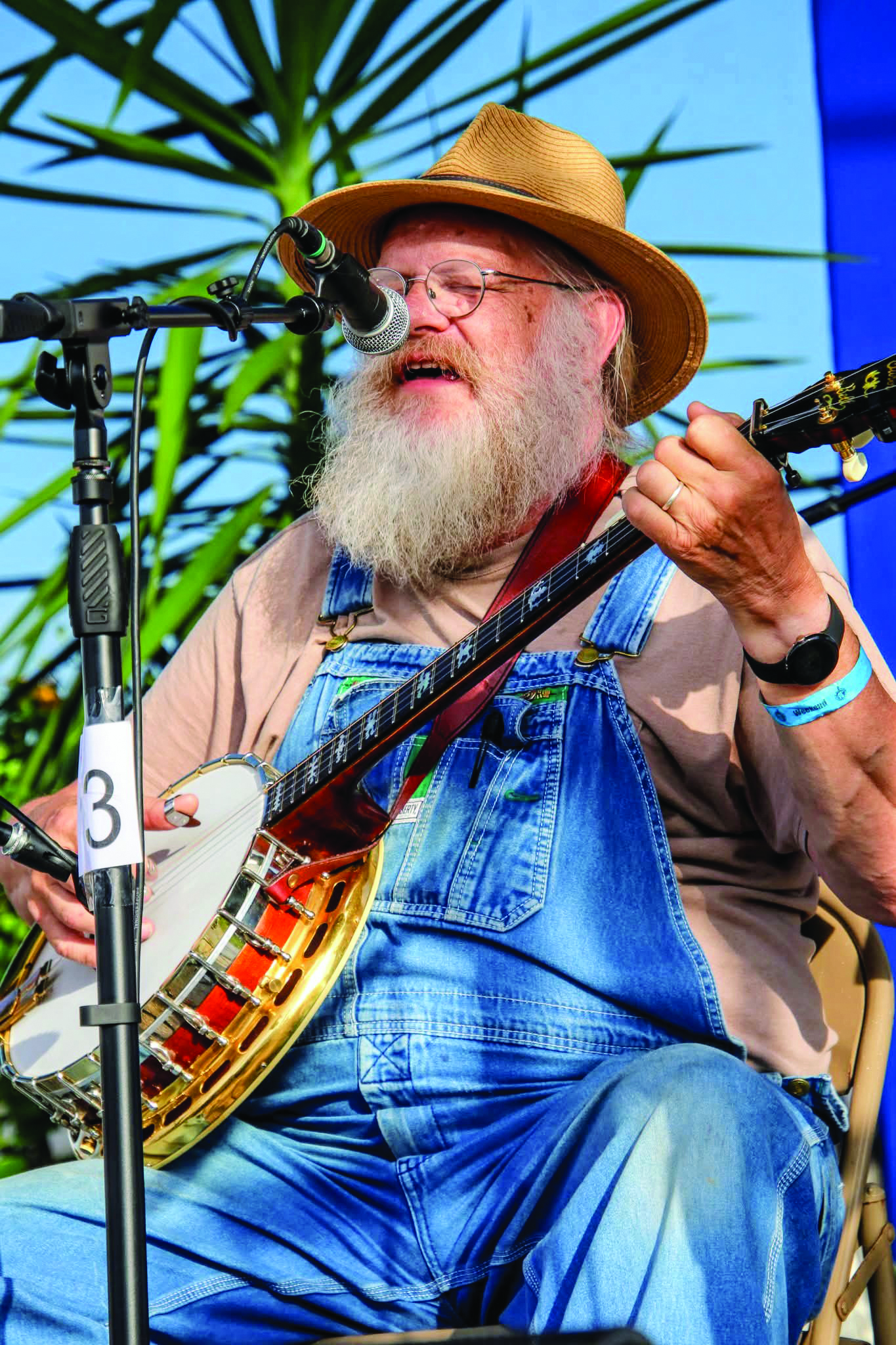
Dennis Farris, who lives in Smyth County, Virginia, creates banjos. His desire to learn to make banjos sprang from his love of music.
He has played for more than 50 years, including 20 years as a member of Southfork, a local band. He has also done solo engagements and theater — most recently in Theatre Bristol’s “Mockingbird Sings’ as a band member and acting the role of Pops Stoneman.
“I became interested in playing guitar and banjo when I was a teen in the early 1970s. My first banjo was bought from Sears for $29, and my first guitar was bought from a man that had made a few and sold them cheap. I had learned from my dad and grandpa how to woodwork but neither had ever played or built a musical instrument.
“I wanted a professional grade instrument but could not afford one and did not see one in my future unless I built it.I took measurements of both and built a guitar and a banjo. I enjoyed the building process so much and took a liking to banjos and thought I would focus on building them.
“As my public work schedule and family responsibility would allow, I would build banjos and learn what worked from my successes and failures. After I retired from public work I wanted to get back in the shop building banjos and picking on a more full-time basis. Most of my banjos are one of a kind as I try to do something different with each one.I also do custom work,” he says.
He makes old-time open back banjos and bluegrass models. He also repairs and breathes new life into old banjos and makes necks for four-string tenor banjo conversions.
“I start my build off with a vision of the banjo I want to build. I work out the details in my head, what woods I want to use, inlays, fret choice, hardware and so on. One thing that makes my banjos different is I often build block banjo rims instead of the laminated one that most builders use. I love the look and sound of the block rims,” he says.
A block banjo rim isa strong, stable and rigid drum-like core for a banjo, constructed by gluing trapezoid-shaped wooden blocks into a ring. Several rings are typically stacked in a “brick wall” pattern (staggered joints), then turned on a lathe to form the final circular shape.A laminated banjo rim is constructed by gluing together two or more thin, bent layers of wood.
“Iuse walnut, cherry and curly maple for the body and rosewood, ebony and Padauk for the fingerboard. Mother of pearl inlay and wood bindings are another favorite of mine. My woods come from a variety of places. Some are bought from exotic wood suppliers; some are wood that I have had in my shop fora long time that I got locally from friends or family. I have met a lot of good folks both as a banjo picker and builder and have learned and swapped ideas from most of them.
“My goal with each build is to make a quality banjo that will still be around 100 years from now in someone’s collection that they are proud to play,” he says.
If you are interested in commissioning a banjo from Farris, you can email him at farrisbanjos@outlook.com.