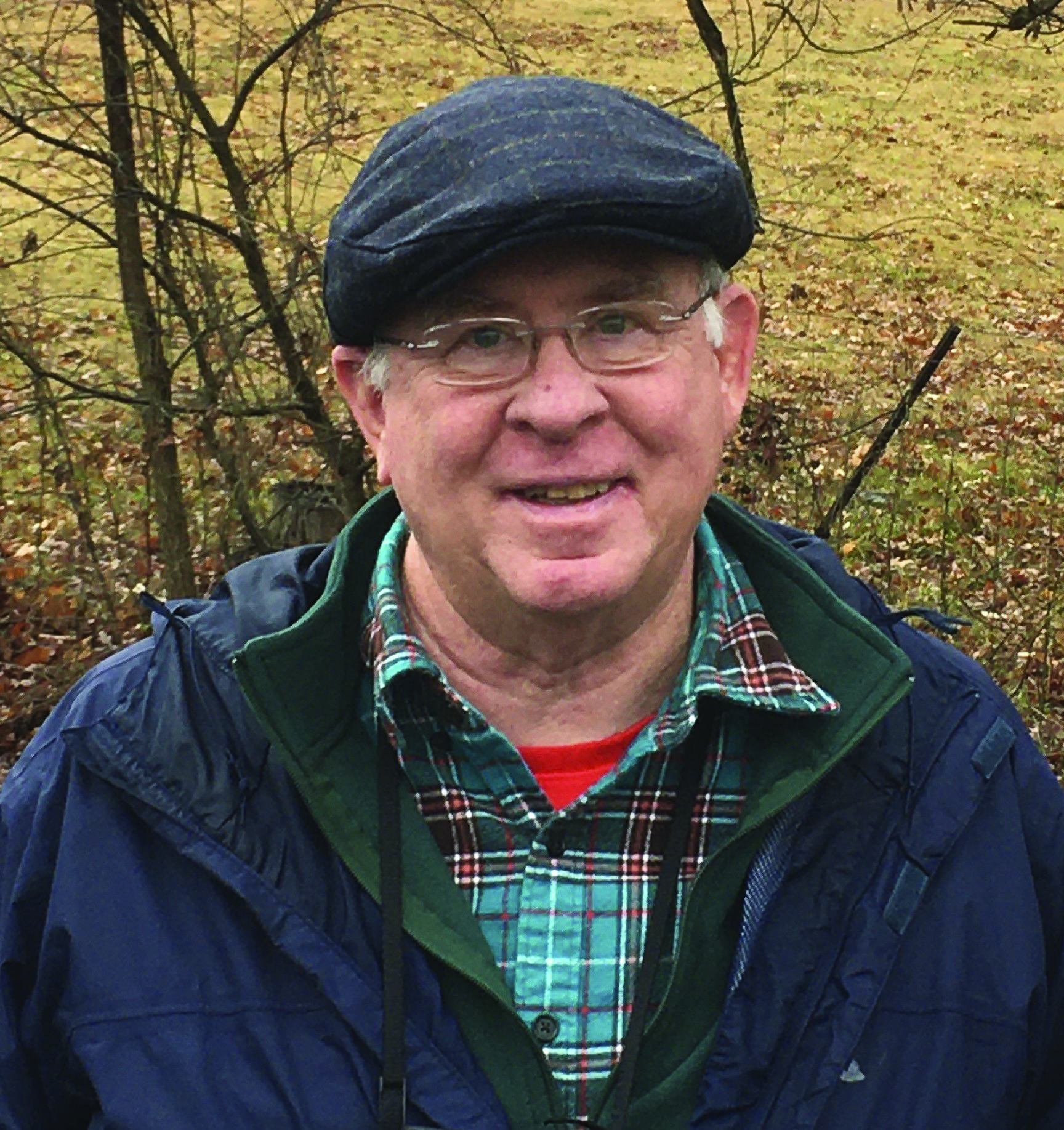
Ed Morgan
Ed Morgan, an Abingdon writer, naturalist and former mayor, discusses his new book, “Notes on the State of Southwest Virginia,” Sunday, Sept. 27, at 3 p.m. as part of the “Sunday with Friends” literary series, sponsored by the Friends of the Washington County Public Library, Abingdon, Virginia.
In 2015 Morgan came across a map published by The Nature Conservancy which illustrated biodiversity hot spots in the United States. He was astonished to realize that Southwest Virginia was perhaps the most biodiverse location in the nation. He immediately asked himself how this was possible and why he didn’t know about it. “Notes on the State of Southwest Virginia” is a series of essays and memoirs exploring those two questions.
Morgan describes himself as an amateur naturalist with a broad knowledge of Southwest Virginia, the region where he has lived for 75 years. He is writing for the non-scientist, people like himself who possess a keen interest in nature and would like the opportunity to experience the region’s hidden riches. While his book focuses on Southwest Virginia, many of the events and topics examined apply to the Appalachian region as a whole.
The title of his book is a homage to Thomas Jefferson who was one of the first people to examine the biodiversity of Virginia. In his 1785 publication, “Notes on the State of Virginia,” Jefferson describes some of the flora and fauna of his native state in an effort to dispel the European idea that the biota of North America was inferior to what existed in the old world.
Morgan notes that his book has turned out very differently from the textbook-style discussion of biodiversity that he had originally planned, but the project took on a life of its own. He became intrigued with the story of how in 1782 Arthur Campbell from Abingdon dropped off a mammoth molar at Monticello in an effort to build a relationship with Jefferson. Jefferson tried to determine the current location of that tooth — which led him down a “rabbit hole” that turned into his book that explored the Pleistocene age, river cane, the difference between mammoths and mastodons, his slaves, the smallpox vaccination, historic springs resorts of Virginia, our nation’s early diplomacy with France, anachronistic fruit, the origin and preservation of mountain balds and post-revolutionary war politics.
Morgan writes about the many scientists, professional and amateur, who have studied the biota of our region and its supporting ecosystems along with government officials and private citizens who have worked to preserve this bounty.
He notes that researching this book has been a great adventure. He was given the rare opportunity to spend time in the field with professional and amateur scientists who were excited about freshwater mussels, salamanders, insects, rare plants, bats, caves, spruce and chestnut trees, flying squirrels, birds, elk, trout and mushrooms. The people he met were eager to share their knowledge.
Morgan’s outdoor experiences have included hunting, trapping, fly-fishing, long-distance hiking, rock climbing and cross-country skiing. He was involved in the initial exploration and mapping of several of Southwest Virginia’s premier caves. These days Morgan is primarily a birder, a hobby available every day to anyone interested in nature. He graduated from Emory & Henry College.
The Friends of the Washington County Public Library is a volunteer, non-profit organization whose purpose is to help strengthen the resources of the library and to make it a dynamic force in the community.
The event is free of charge. There will be book sales and signings after the event.